about
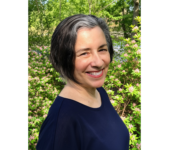
Image: Kenneth Hinegardner
Video artist Amy Kaczur has exhibited her work globally, focusing on environmental issues and community. She has lived and worked extensively in Boston, Cambridge, Long Beach, and Los Angeles. Kaczur has participated in residency programs in California, Colorado, and New York and is a member of Kingston Gallery, Boston.
Kaczur’s current projects focus on urgent water issues, particularly the impact of rising sea levels on coastal flood zones in the United States and the threats they pose to coastal marshes and ecosystems. Her dedication to environmental advocacy is deeply rooted in her upbringing near the industrial hub of Cleveland, Ohio, where her family has a rich history in farming, the food industry, mills, and coal mining in rural Southern Ohio, near the Appalachian region. These formative experiences have fueled her passion for addressing critical environmental challenges, including pollution, climate change, and the complex balance between land use and conservation. Her sixteen years in Southern California also gave her valuable insights into land use and water scarcity, inspiring her to contribute to these important discussions and solutions.
Along with her art practice, Kaczur works at the Massachusetts Institute of Technology as a group administrator for three research labs focusing on air and water pollution, climate change modeling, and clean energy development and storage. She continuously develops her art practice, supported by relentless research, discovery by experiment, and the pleasure of inquisitive searching.
In 2025/26 she was a recipient of the Great Marsh Artists Fellowship, a program collaboration between Manship Artists Residency and Artists for the Great Marsh. Funded in part by the Kathleen Van Demark Fund for the Great Marsh.
As a 2026 recipient of the School of the Museum of Fine Arts (SMFA) at Tufts Traveling Fellowship, Kaczur is traveling to vulnerable marshes along the U.S. East and Gulf Coasts to conduct research for a multimedia project exploring coastal ecosystems threatened by climate change.
Through video, drone documentation, field recordings, mapping, and community engagement, she will continue to capture landscapes facing daily inundation by 2050, documenting both environmental risk and restoration efforts. The research will inform installations, experimental videos, and public presentations that reveal the beauty, fragility, and resilience of these threatened environments.
Kaczur holds an MFA from the University of California, Irvine, and a BFA from Tufts University.


